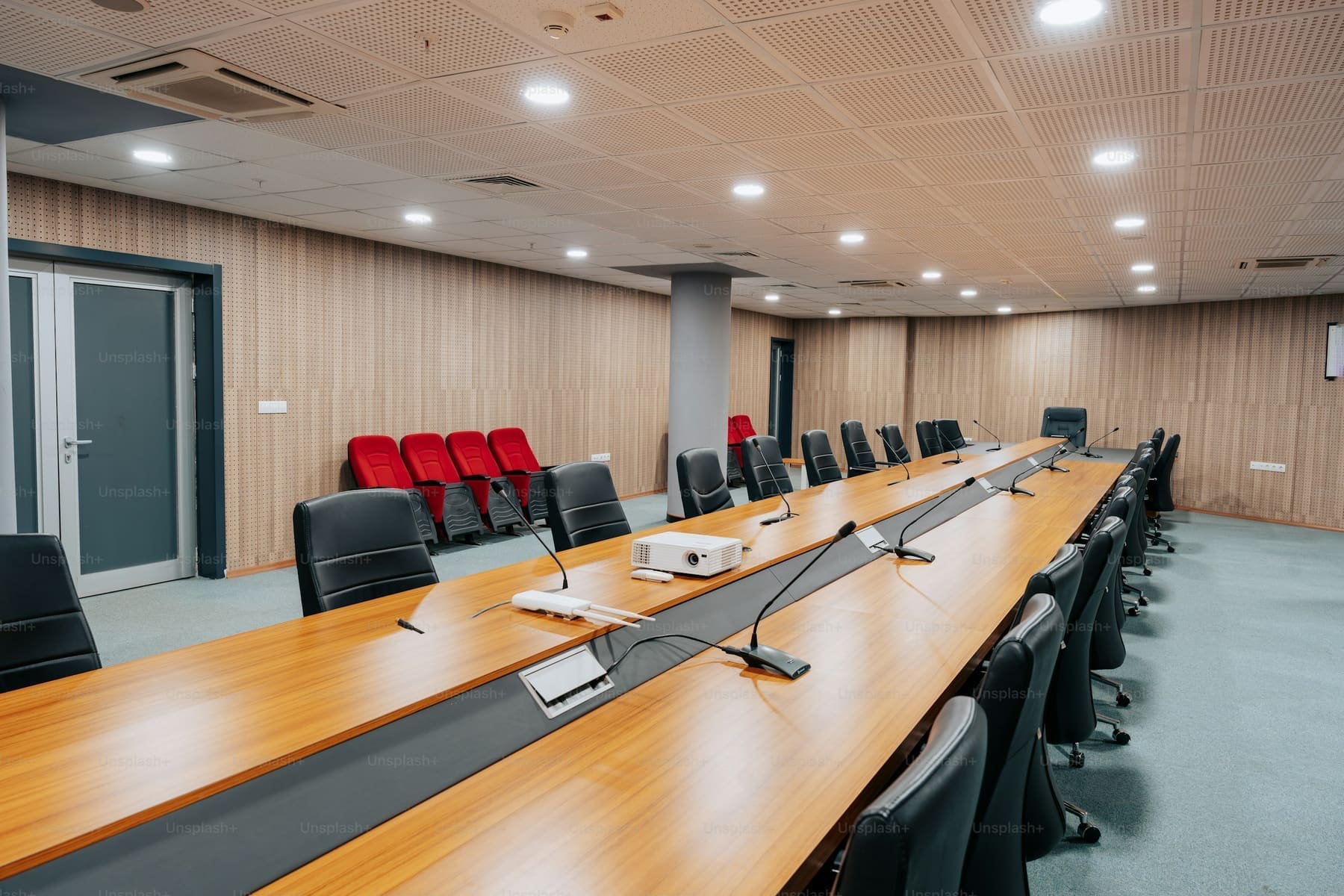
A good share of our work is fixing rooms somebody else installed. The mistakes repeat, and almost all of them are cheaper to avoid than to correct.
Buying the display first
The display is the visible purchase, so it gets specified before anyone has measured the furthest seat or thought about audio. Then the budget is committed and the microphone coverage becomes whatever is left over. Fix: settle the room's dimensions and seating first, and let the display size fall out of the viewing distance.
Ignoring acoustics until the room echoes
Glass walls, hard floors and a bare ceiling make a room that sounds fine in person and terrible to everyone dialling in. No microphone fixes a reverberant room; it only picks up the reverberation more clearly. Fix: budget for acoustic treatment during fit-out. Retrofitting panels after the room is in service costs more and looks like an afterthought.
Under-provisioning the network
Rooms get built, then someone discovers there is one data drop where three are needed, or that the switch port cannot supply PoE for the ceiling array. Fix: agree the network requirements with IT before first fix, and pull more cable than the design needs. Spare capacity in a wall is free; a second cable pull is not.
Mounting the camera in the wrong place
A camera above a tall display looks down at the tops of heads. One below eye level does the opposite. Fix: mount at or slightly above seated eye level, which usually means planning the display height around the camera rather than the other way round.
Assuming certification transfers between platforms
Hardware certified for one conferencing platform is not automatically certified for another, and the gap usually shows up in the controller and the scheduling behaviour rather than in picture or sound. Fix: confirm certification per model against the platform your organisation actually runs.
Treating handover as the end of the project
A room commissioned and then left alone drifts: firmware ages, presets get changed, someone unplugs something. Fix: agree monitoring and a support arrangement at purchase, so the room is still working the way it was designed a year later.
Every one of these is cheaper to prevent during design than to correct during occupancy.